


 United Kingdom
 Best Seller
 Thermal Printers
 All Thermal Labels
 Money Counters
 Thermal Label Printer Kits
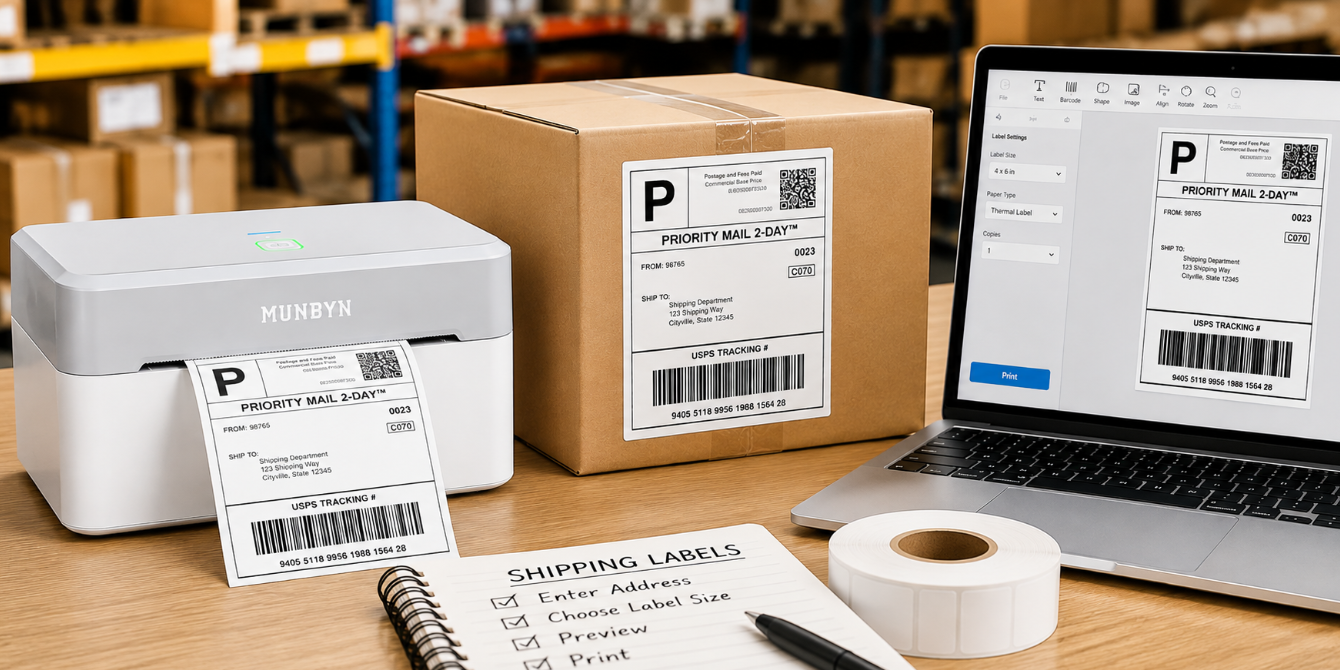
If you're packing and dispatching 30, 50, or 100+ parcels a day, you already know that your shipping setup can make or break your afternoon. A slow or unreliable postage label printer doesn't just cost you time — it creates a bottleneck that backs up your entire fulfilment process.
This guide is for UK sellers and warehouse managers who've outgrown their home inkjet and need something built for sustained, high-volume output: ecommerce businesses, Amazon FBA sellers, multi-channel retailers, fulfilment centres, and anyone running a busy despatch operation. Here's what actually matters when choosing shipping label printers at scale.
Why Thermal Is the Only Sensible Choice at Volume
Before getting into specs, let's settle the thermal vs inkjet debate quickly: at high volume, there's no real contest.
Thermal label printers use heat to activate dye on the label surface — no ink cartridges, no toner, no ribbon replacement mid-shift. Once set up, they just run. That matters enormously when you're printing 200 labels before lunch. Inkjet printers not only need consumable refills; they also smear when wet, which is a genuine problem for parcels passing through Royal Mail's sorting network.
Direct thermal is the standard for shipping label printers across the UK, from solo Etsy sellers to large 3PL operations.
The Five Things That Actually Matter for High-Volume Use
1. Print Speed
This is the headline figure. Most entry-level label printers manage around 100mm/second. That's fine for occasional use, but at high volume, you want at least 150 mm/s, with top-tier models hitting 200 mm/s or faster.
At one 4×6 label per second, a busy dispatch team won't be standing around waiting. That's the benchmark to aim for.
The MUNBYN RealWriter 941BP is built precisely for this kind of throughput — it's designed for sustained business use rather than occasional home printing, with Bluetooth and USB connectivity and a 300 DPI print head that keeps barcodes clean and scannable even at speed.

2. Print Resolution
For standard domestic shipping labels, 203 DPI is sufficient. Barcodes scan reliably, and addresses are legible. But if your labels include small text (SKU codes, reference numbers, return addresses in fine print), or if you're printing compliance labels that need to meet specific Royal Mail or courier specs, 300 DPI is worth the upgrade.
Higher resolution also means your labels look more professional — which matters if you're sending branded packaging to customers.
The MUNBYN RealWriter 405B goes a step further with dual-colour thermal printing (red-black or blue-black), useful for operations that use colour-coded labels for routing, priority orders, or returns handling — without adding ink to the equation.

3. Durability and Print Head Lifespan
A print head is the most wear-prone component in any label printer. Budget printers use print heads rated for around 50km of printing before quality degrades. Industrial-grade heads go significantly further.
For high-volume operations, look for a printer with a replaceable print head. This is crucial: when the head eventually wears, you should be able to swap it in minutes rather than replacing the entire unit. The MUNBYN 405B has a replaceable print head — a feature often overlooked until the day you actually need it.
4. Connectivity and Workflow Integration
How your printer connects to your systems matters more than most buyers realise up front.
USB is simple and reliable — ideal if your printer is permanently stationed at a packing bench connected to a PC or laptop. No drivers, no dropouts.
Bluetooth adds flexibility. If your dispatch team moves around, or if you're printing from a tablet or phone (common in smaller warehouses), wireless printing removes a lot of friction. The MUNBYN 403B supports both Bluetooth and USB, so you're not locked into one setup.
AirPrint is less common for heavy shipping use, but useful if your team uses MacBooks or iPhones as their primary devices.
Beyond physical connectivity, check platform compatibility. In the UK, you'll typically be printing from one or more of:
- Royal Mail Click & Drop
- Evri, DPD, DHL, or Parcelforce despatch portals
- Amazon Seller Central or FBA
- Shopify, WooCommerce, or Linnworks
- eBay, Etsy, or Vinted (increasingly common for multi-channel sellers)
Most MUNBYN printers support all of these out of the box, which means less troubleshooting and more actual shipping.
5. Label Compatibility and Roll Capacity
The standard UK shipping label size is 4×6 inches (102×152mm). Confirm any printer you consider handles this natively — most do, but it's worth verifying.
More important for high-volume use is roll capacity. A printer that needs reloading every 100 labels will interrupt your workflow constantly. Look for a model that accepts standard 250- or 500-label rolls, and check whether it supports both fanfold and roll formats, since some platforms generate labels in one and not the other.
The MUNBYN RealWriter 403B handles both formats and supports the major UK shipping platforms — a solid, no-fuss workhorse for sellers scaling up from a home setup.

Royal Mail Compliance: What You Need to Know
Royal Mail currently uses three label templates for their services (Tracked, Signed, and Special Delivery). Your printer and label size need to match these. The 4×6 format covers all three, so as long as you're printing at that size, you're covered.
More importantly, Royal Mail's barcode scanning requires clean, high-contrast output. A worn print head or a low-resolution printer is one of the most common causes of scan failures at sorting centres, which leads to delayed deliveries and customer complaints. This is another reason to prioritise print quality and maintain your hardware properly.
Volume Benchmarks: What Printer Class Do You Need?
Here's a rough guide based on daily despatch volume:
Under 50 labels/day: An entry-level model like the MUNBYN 403B is more than capable. It handles the major platforms, connects over Bluetooth or USB, and won't break the bank.
50–200 labels/day: You'll benefit from a faster, more robust printer. The 941BP's 300 DPI print head and business-grade build make it well-suited to this range.
200+ labels/day: At this scale, print head lifespan and replaceability become critical. The 405B's dual-colour output, replaceable print head, and high-speed throughput (one 4×6 label per second) make it the logical choice. Consider having a second printer on standby.
Common Mistakes to Avoid
Buying by price alone. A £40 thermal printer might handle 20 labels a day comfortably. It will struggle at 150. The cost of downtime and reprints will exceed the money saved on hardware within weeks.
Ignoring the total cost of ownership. Thermal printers have no ink costs, but labels aren't free. Factor in label roll pricing alongside the hardware cost — MUNBYN sells compatible label rolls directly, which simplifies reordering.
Overlooking driver and software support. Some budget brands offer minimal support for Mac or Linux environments. If your team uses anything other than Windows, confirm compatibility before purchasing.
Skipping the replaceable print head check. If the model you're considering has a sealed, non-replaceable head, you'll be buying a new printer the moment it degrades. At high volume, that day will come.
Final Thoughts
For high-volume UK shipping, a good postage label printer isn't a nice-to-have — it's infrastructure. The right choice depends on your daily volume, your platform stack, and the flexibility your team needs in where and how they print.
If you're ready to upgrade, MUNBYN's UK range covers the full spectrum from growing small businesses to serious dispatch operations. You can browse all MUNBYN shipping label printers here — all with UK stock and fast dispatch, so you're not waiting weeks for hardware that should have arrived yesterday. (Use the limited-time discount code "MYSEO" at checkout to enjoy an extra 8% off for MUNBYN products!)
Share:
Guide to Make Easy Personalized Cupcake Toppers
Money Counter: UV, MG, IR, CIS Counterfeit Detection Explained